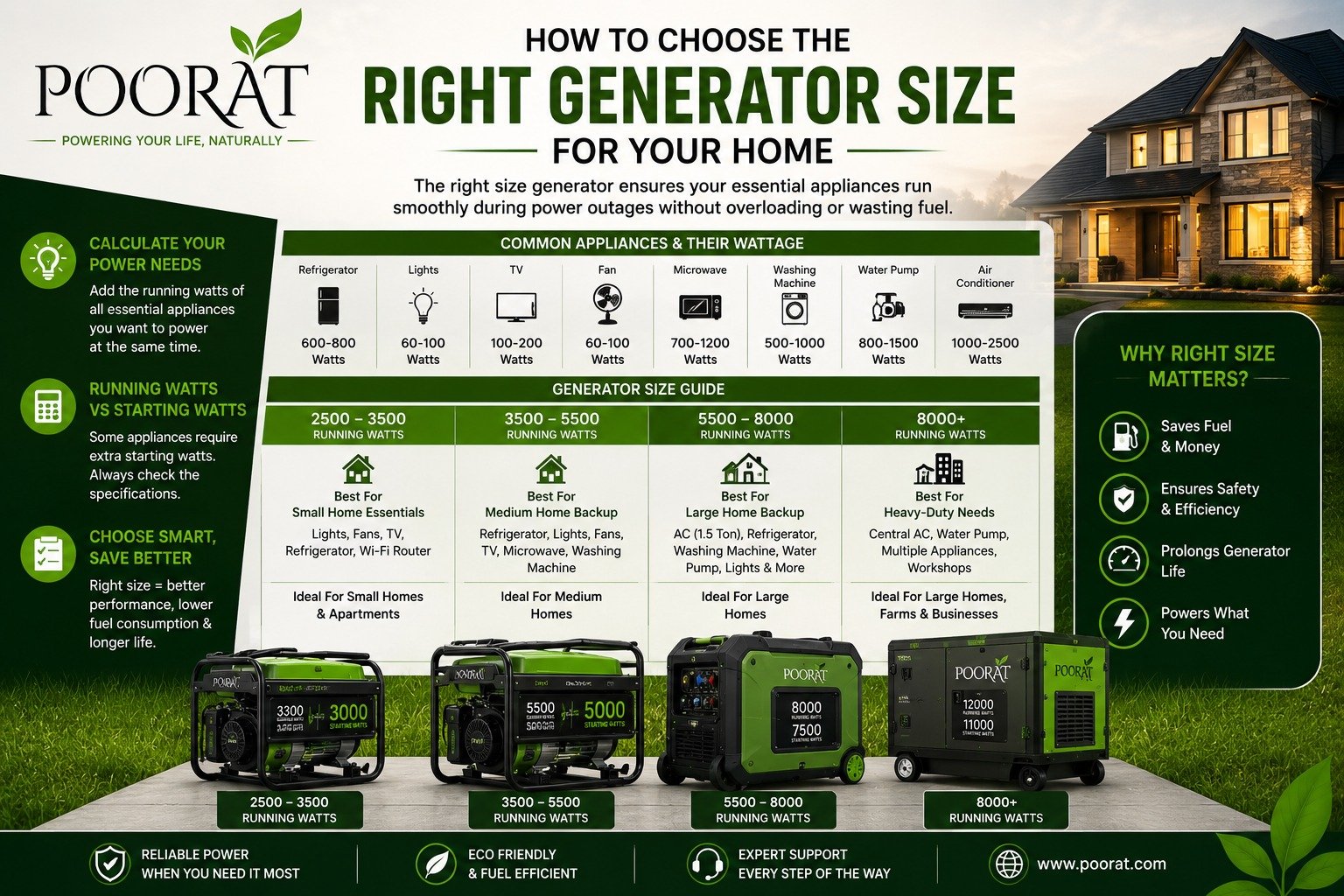
Step 1: List Out What You Actually Need to Run
Before looking at any spec sheet, sit down and list the appliances you want powered during an outage:
- Refrigerator
- Lights and ceiling fans
- Air conditioner or split unit
- Wi-Fi router
- Water pump/motor
- TV and phone chargers
Every appliance has two numbers that matter: running watts (what it needs to operate normally) and starting watts (the surge needed to kick on, often 2-3x higher for anything with a motor). Fridges and water pumps are the usual culprits for that starting-watt spike, so don’t skip this step.
Step 2: Do the Math
The formula is simpler than it looks:
Total Running Watts + Highest Single Starting Watt = Minimum Generator Capacity You Need
For example, if your combined running watts add up to 2500W and your fridge needs an extra 1200W just to start (on top of its running watt already counted), you’re realistically looking at a 3000-3500W generator to run everything comfortably with some breathing room.
Step 3: General Sizing by Home Type
- Small home/apartment (basic lights, fans, fridge): 2000W – 3500W
- Medium home (no AC, but router, pump, TV included): 3500W – 6000W
- Larger home (one AC unit, multiple rooms): 6000W – 10000W
- Full home backup (multiple ACs, heavy motors): 10000W and above, or consider a standby unit
These are ballpark figures — every household’s load is different, so calculating your exact appliance list is still the most reliable approach.
Inverter or Conventional Generator?
If you’re powering sensitive electronics — laptops, LED TVs, medical devices — an inverter generator is the safer bet since it delivers clean, stable power without voltage spikes. Conventional generators are better suited for heavy-duty loads where power purity isn’t as critical.
Don’t Forget Fuel Type
Petrol generators are widely available and easy to maintain, but running costs can add up. Diesel units are typically more fuel-efficient over long stretches, making them a smarter pick for larger homes with heavier daily use. You’ll find both options in Poorat.com’s generators collection, where you can filter by capacity, fuel type, and brand to land on the right fit.